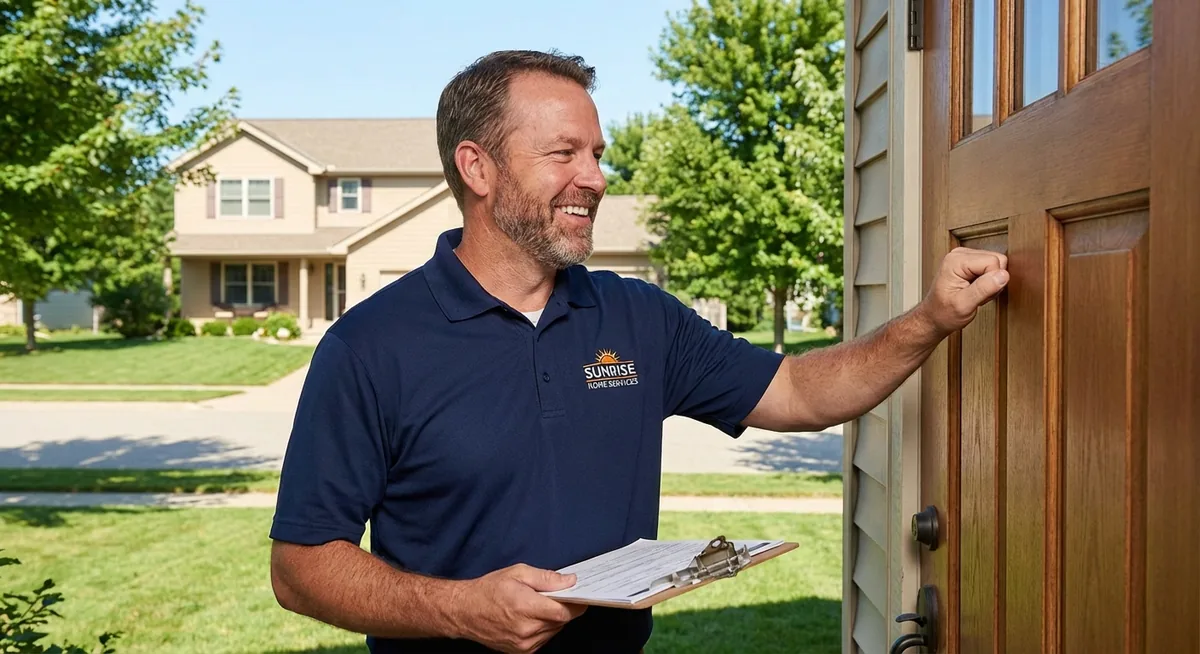
Most contractors, especially new ones, hate to hear it but traditional door-knocking might be the strategy that you should be focused on, at least in part. It always has been and remains one of the most powerful ways to establish a direct connection with people in your community, the ones that you choose. Knocking, when done effectively, is more than a way to gain new leads – it’s a real-time research tool, a brand-building exercise, and a proven path to word-of-mouth referrals, reviews, and skills that will never leave you.
Here’s my most current comprehensive strategy that breaks down door-knocking into actionable steps and lines everything up to maximize your chances for success. I’ve done these things myself and I know exactly how good of a strategy this can be if you’re willing to go out into the world and put yourself out there.
It’s Not Just About Money: All the Things You Get Out of Knocking Doors
It’s easy to get stuck in a rut where all you focus on is money but the fact is, if you chase money, it will elude you. There are a lot of things you have to gain from door knocking.
Sales Experience
Go and knock 1000 doors and talk to hundreds of people and tell me that doesn’t transform you at least a little bit. Your confidence in your ability to communicate the value you have to offer will go through the roof. You might even find that you enjoy it. That’s how it was for me.
If you do what most people do and wait for work to come to you, you might have a couple dozen sales conversations in a year. If you go knock doors, you will do the same amount of sales conversations in a few days. Packing in the experience will make you grow 100x faster.
Trade Experience
If you are a HVAC tech, garage door guy, handyman, etc. then you can offer a free inspection on existing equipment. I recently talked to a guy who is new to the garage door business and I told him to go door to door and offer free inspections. He will learn a ton about garage doors, the different ways they are built and installed, who installs them in his area, and many other things just by giving free inspections. If you don’t have any paying customers, then go out and find a way to get your hands on this stuff for free so you can get experience.
Reviews
If I was brand new to business and had nothing better to do, I would go door to door, offer free inspections and estimates, and look for anything I could do to make the person’s day better. “Hey, I will fix your gate for free if you promise to leave me a good review.”
Knowing what I know about online marketing and how important reviews are, if I could end the day with a few reviews, I would be very excited. 10 days like that and I would be beating half of my competition on reviews. While everyone else is out there lucky to get 1 review a week, I would be stacking multiple per day. This alone is a way to build up a business because reviews = customers calling.
Referrals
Every time I made someone happy, got a review, did a free inspection, or whatever, I would ask them if they know any of their neighbors. If they do, I would ask if I should go talk to them. If I can get a yes, then I instantly have an easy-in for the next door I knock.
“Hey, I was just helping your next door neighbor Jim with his garage door and I bet yours is having similar problems. He said I should come ask you if I can take a look…”
This makes it way more likely that the person will talk to you. You can chain these interactions together. This is what the game is all about. I know people who build their entire business doing this and no other type of marketing or customer acquisition strategy.
What Else Can You Think Of?
I hope you are seeing my point. There are a lot of things you have to gain from a potential customer besides just money. If you do all these other things consistently, the money will flow to you like water down a mountain.
Ok, now you see where I’m coming from… There’s so much to gain. How exciting, right?!
Let’s get into the nitty gritty. This is where the rubber meets the road. Make a checklist and get to it!
Step One: Create a Professional Image – Be the Brand
First impressions are everything. You could walk around the a neighborhood in your street cloths but nobody is going to take you seriously and you’ll risk catching people off-guard by not making it clear with your appearance that you’re here on official business. If you’re starting from scratch, here’s what you need:
- Logo
- Branded shirts (and hats)
- Uniform pants
- Business cards
- DBA or LLC
- Google Business Listing
- (Optional) Stickers
- (Optional) Stripe account
Logo
These days you can use AI to create as many logos as you wish. I’ve seen some AI-generated logos that were really really good. You don’t need anything crazy. The point is that you need to look like an established company and a logo is the first step.
Branded Clothing
Take your new logo, or old one, down to a local printing shop and get some shirts made. They will help you make them look awesome and can guide you through what shirts will suit you best. If you are a hat person, get some hats made too. I suggest starting with 5 shirts but do whatever makes sense for you. If you aren’t totally committed to this business, don’t waste a tone of money getting 100 shirts made. Start small – all you need is enough to get you through a laundry cycle.
Finish the Uniform
I am known among my friends as family as the guy who is dressed “‘head to toe, from Costco”. What can I say? They have cheap clothes that are perfect for working in. Go to Costco or any store and find a few pairs of pants that fit your uniform. Your goal here is to look the same every day so you are easily recognizable and look like you’re ready to work.
Business Cards
I will explain later why I think business cards are so important. Some might argue that they are a thing of the past but they’re pretty cheap to get made and are an easy way to give someone your contact info.
DBA or LLC
If you are just starting out on something and are not licensed and insured, you can probably get away with filing a DBA (Doing Business As) with your secretary of state. This simply says that you are operating under a business name but are actually representing yourself as a sole proprietor. If you don’t know what that means, Google it, seriously.
If you are licensed and insured and intend on doing work with subcrontractors or employees, then I suggest filing a LLC. I did a whole video with Bobby Casey on this subject. ((LINK TO VIDEO))
Google Business Listing
You are going to want to go to google.com/business and get your business registered on Google Maps. It’s free to do and extremely important as this is where you are going to ask people to leave you reviews. I wrote a guide for setting these up so if you need some help with it, check it out. ((LINK TO ARTICLE)).
You may need a piece of mail with your business name and address on it so make sure you file your paperwork with the address you intend on using for your GMB (Google Business Listing).
Stickers (Optional)
You’ll see why I mention this later on.
Stripe Account
Stripe is a payment processor that will allow you take payments via credit card. If you manage to find someone who wants to give you money, you want to be ready to take it.
Step Two: Define Your Strategy – Start Small and Build Up
When launching a door-knocking campaign, don’t spread yourself too thin. “Narrow down the area you’re targeting” to something manageable. Focus on becoming the go-to expert in a small area rather than trying to cover the whole town. Aiming to “take over your neighborhood” is an approach that has proven effective for service providers, particularly in competitive markets. Remember, if you can win on your home turf, you’re in a better position to expand gradually.
Tracking each interaction is crucial. Every door you knock on, every response you get—whether they’re interested, not at home, or say no—should be recorded in a spreadsheet. Use a phone or tablet to update this as you go. This way, you can come back with a targeted follow-up plan, helping you fine-tune your approach and learn from each interaction.
- Set up a spreadsheet (Google Sheets if free)
- Define what area you are going to target
- Make a list of the houses you are going to knock
- Set up your spreadsheet to track your actions.
When it comes to tracking, I usually start by tracking everything I can think of. Once I actually start the process I usually cut out half the metrics I’m tracking because I decide they aren’t relevant. You are going to want to go back and see things like:
- How many doors you need to knock to get a conversation.
- How many conversations you need to have to get an estimate or special offer accepted.
- How many estimates you need to do in order to get a paying customer.
- How many reviews you managed to get.
The list can go on and on. You need to make your own list. Here are some things to track no matter what:
- Track every door you knock and what the result was. If nobody answered, you’ll need to go back later.
- Track every conversation you have and the result.
- Track every inspection or free offer you do.
- Track every time you ask for a review and when someone gives you one.
- Track every estimate you put out.
- Track every job you get.
- Track every penny you make.
As you go through this experiment, you want to be able to look back be able to answer questions such as:
- How many doors does it take to get someone to answer?
- How many answers does it take to get someone to talk to me?
- How many conversations to get an estimate?
- How many estimates to get a job?
- The average $ value of a job.
Ultimately you will be able to answer: How many doors do I need to knock to make a dollar. When you track this data, you will know exactly how many doors it takes to make money. Only then can you decide if it is worth your time or not.
You can do this without tracking but you will run out of steam fast and will not get much out of it. In a month you’ll forget about everything that happened and you’ll have no clue how good it works on an objective basis. Track your shit, seriously.